The Block · PUBLISHED 13 OCTOBER 2026
The questions I didn't ask
If your grandparents are still here, the most valuable family research you will ever do costs nothing. These are the questions I wish I had asked mine.
For more than twenty-five years I have been researching my own family: documenting their birth, death and marriage records, and scouring old newspapers hoping to find more about them. I have read German parish registers written in a script most people can no longer read, with help from a close friend, followed a household across the Atlantic on a passenger manifest, and settled a maiden name the family had carried wrong for generations.
And the thing I think about most, doing this work, is not in any of those records.
It is the questions I didn't ask my grandparents.
I was in my early thirties
My grandparents died when I was in my early thirties.
My parents were close to both their parents. For a time my dad's mother lived in the garden apartment in our house, and I remember visiting with her, playing with her dogs, Pepsi and Shadow, and asking her to come outside so I could swim in our pool. With my mom's parents, I remember playing in the yards of the Avondale neighborhood where she grew up. Making tin-can pinwheels with my grandpa. Making waffle fries at my great-aunt's house across the street. The Cubs game on the radio in the background at my grandparents' house.
But those are my memories, not theirs.
I wasn't uninterested. I was busy, the way everyone in their twenties and early thirties is busy — work, a life being built, and the reasonable belief that there would be time later. They told stories at the table and I listened to some of them. I didn't write any of them down. I didn't ask the follow-up question, the one that turns a story into something a researcher can use: which town, which year, what was his name.
It did not occur to me until after my grandparents had passed, and years later talking with my parents, that the people who could answer were the last people who could.
The stories are not being written down
It is easy to assume someone in the family has this covered. Usually nobody does.
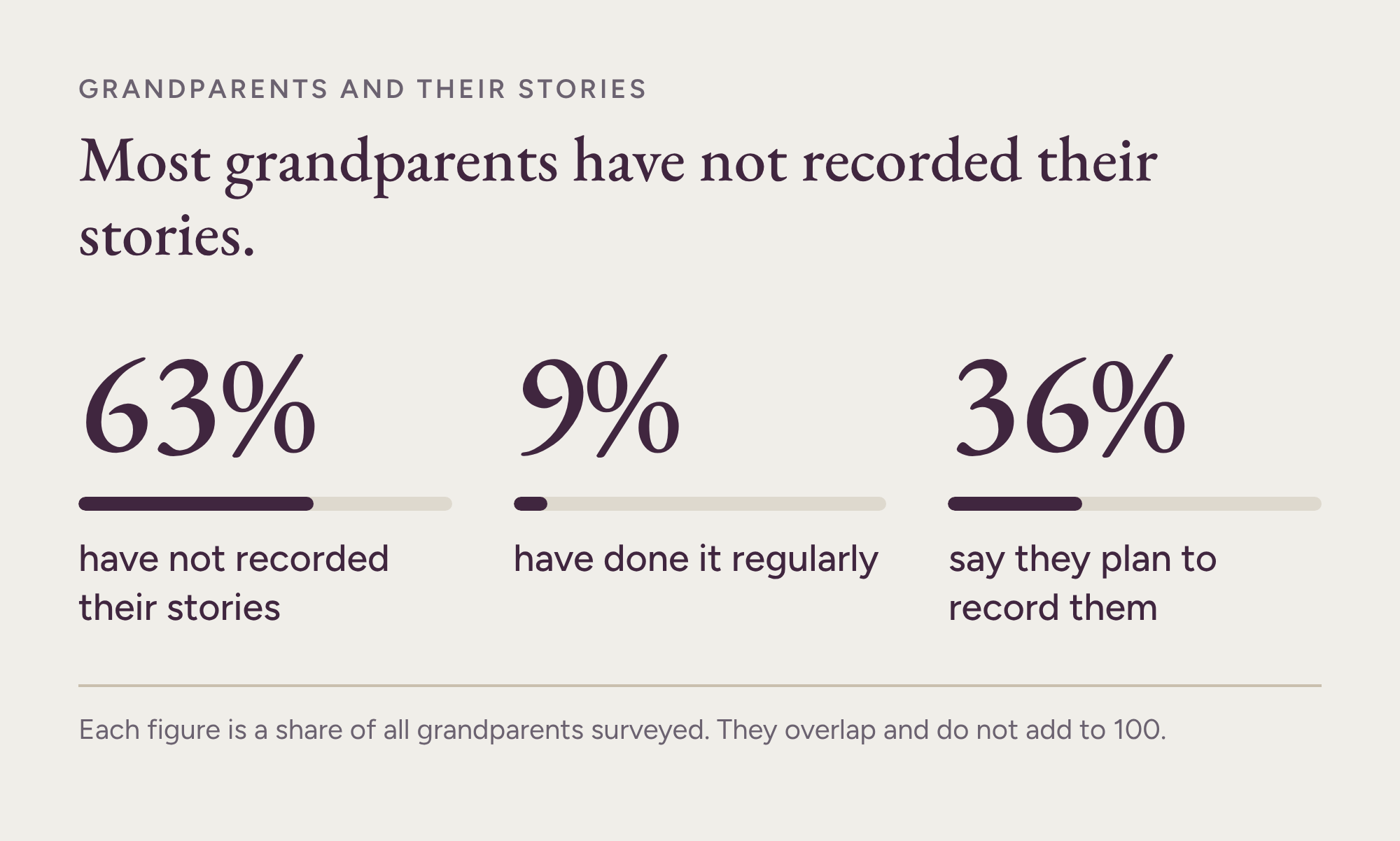
Someday is the word I would take out of that. If you are waiting for them to write it down, and they are waiting for someone to ask, the stories go with them.
What I would ask now
When I sit with a record now, I can usually tell you what it says. What I can't tell you is what it was like. A manifest gives me a ship, a date and a household of five. It doesn't tell me whether the mother on that list was frightened, or who she left behind, or whether she ever spoke of going back.
These are the questions I would ask, if I had one more afternoon:
- What was the house you grew up in like? Who lived there with you?
- What did your father do for work? What did your mother's days look like?
- Where did your parents come from — the town, not just the country? Did they ever say why they left?
- What did they bring with them? Is any of it still in the family?
- What language did they speak at home? Did they stop speaking it, and when?
- What were the challenges they faced after moving to the United States?
- What were your own grandparents like? Did you ever meet them?
- How did your parents meet? How did the two of you meet?
- Was there anyone the family didn't talk about?
- Who is in this photograph?
- Where is everyone buried?
The last two matter more than they look. An unlabeled photograph is one of the most common things a family hands me and one of the hardest to identify. A burial place is often the key to everything else: a cemetery record leads to a parish, a parish leads to a register, and a register leads to a village.
I'm a context-based person. I want to imagine what all these questions meant to them and what it was like living in their shoes. For example, I had ancestors who lived within blocks of where the Great Chicago Fire started. What was that first night like for them? Did they leave their house and all their belongings? Did they return to their home, or did smoke or other things cause them to move?
If you still have a great-grandparent
Don't wait at all. You are talking to someone who may have known the people who made the crossing, heard their accents and eaten at their table. That is one living memory away from the immigrants themselves, and it will not come around again.
The same goes for a great-aunt who remembers everyone, or the cousin who ended up with the photographs. The person who knows is not always the one you would expect.
Ask your questions while the people who can answer them are here. Let me know how I can be of help to you in this process.
Is there a question you wish you had asked, or one you are about to? I would like to hear it. Start a conversation.
The Block, by email
We're always turning new corners on The Block, subscribe to receive new posts from The Block when they are posted.