The Books
The deliverable at Levels 2 through 5 is a bound volume — genealogy, biography and family archive in one object.
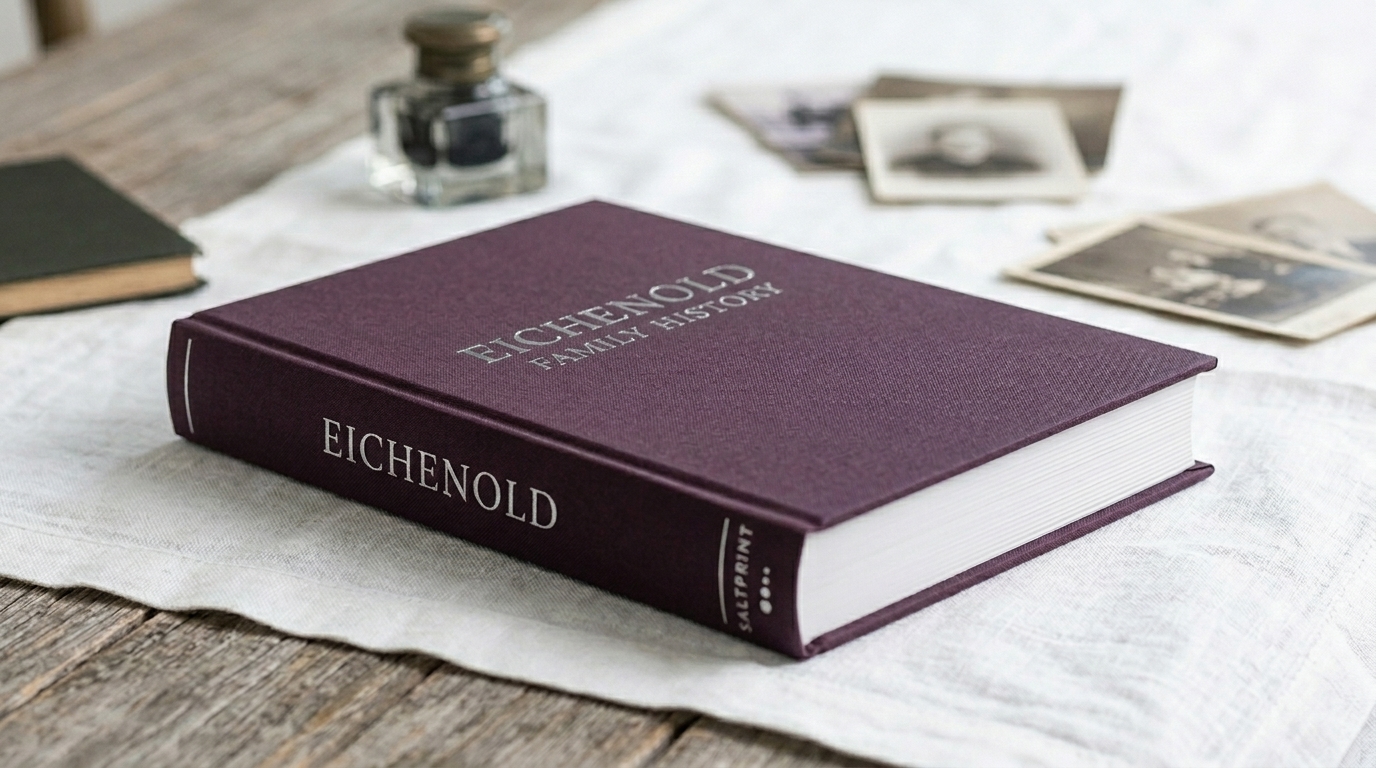
A research report answers a question. A book is what a family actually keeps.
Roughly one third of each volume is visual: photographs, documents, maps, and the records themselves reproduced at a size where they can be read. The remaining two thirds is written narrative — the documented history, with the evidence woven through it rather than exiled to an appendix.
What goes in
- The documented line, generation by generation, with every claim sourced
- Photographs from the family's own holdings, reproduced and captioned
- Historical context for the places and years involved — what a neighborhood was, what an occupation meant, why a family moved when it did
- Oral testimony, clearly marked as testimony and never as record
- Full citations, and the research log
The distinction that matters
Family memory and documentary record are set apart on the page, always. Where they agree, that is worth saying. Where they conflict, both are given, and the reasoning that favors one is written out.
A book that quietly smooths over a contradiction is less valuable to a grandchild than one that shows the seam.
Binding and materials
Volumes are printed and bound for longevity — archival stock, sewn binding, and materials chosen to survive being handled. Specifications are agreed before production and confirmed in writing.
Digitizing and organizing what you already have
Most of what goes into a book arrives as a box, a drawer and a hard drive nobody has opened in years. Sorting that out is work in its own right, and it can be commissioned alongside any report or book.
Digitization process includes secure custody transfer. Using a secure process and custody transfer, your items travel by insured carrier against a signed photographic inventory which is taken before anything is packed. Everything comes home afterwards, together with the digitized files made from it.
- Fragile items are assessed before they are handled — brittle newsprint, flaking tintypes, photographs stuck to album pages. Anything unlikely to survive the process is returned undigitized, and you are told before it is touched.
- Archival masters and everyday copies. TIFF masters for keeping, JPEGs for sending to relatives, all named to one scheme so a file tells you what it is.
- Organized, not just scanned. Files are arranged by family, person and record type, with an index, and delivered to a secure download area that is yours alone and stays open for ninety days.
- Digitizing is not restoration. Retouching, repair and reconstruction are separate work, quoted separately — they are offered, not assumed.