The Block · PUBLISHED 31 OCTOBER 2026
The Halloween parade
Five blurry snapshots of my mother's 1952 Halloween parade at Linné School in Avondale, the memories they brought back for her, and what the Park District's own photographs say about Halloween on the Northwest Side.
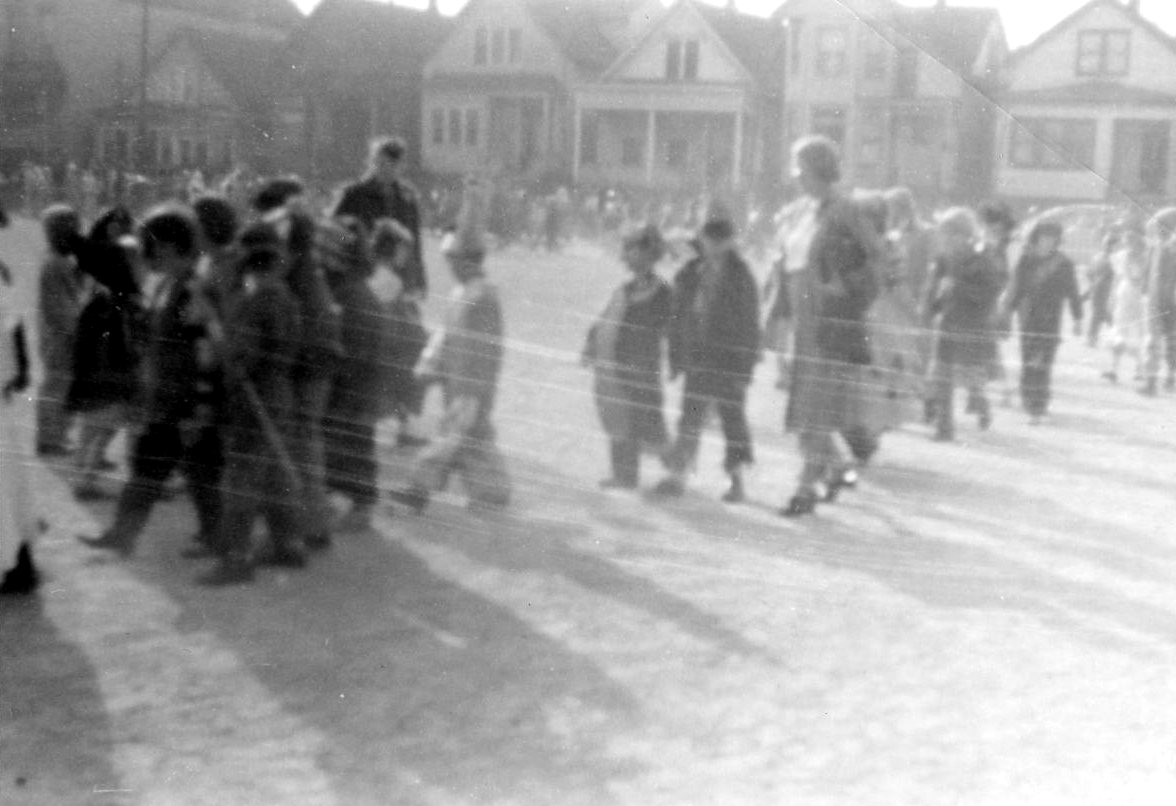
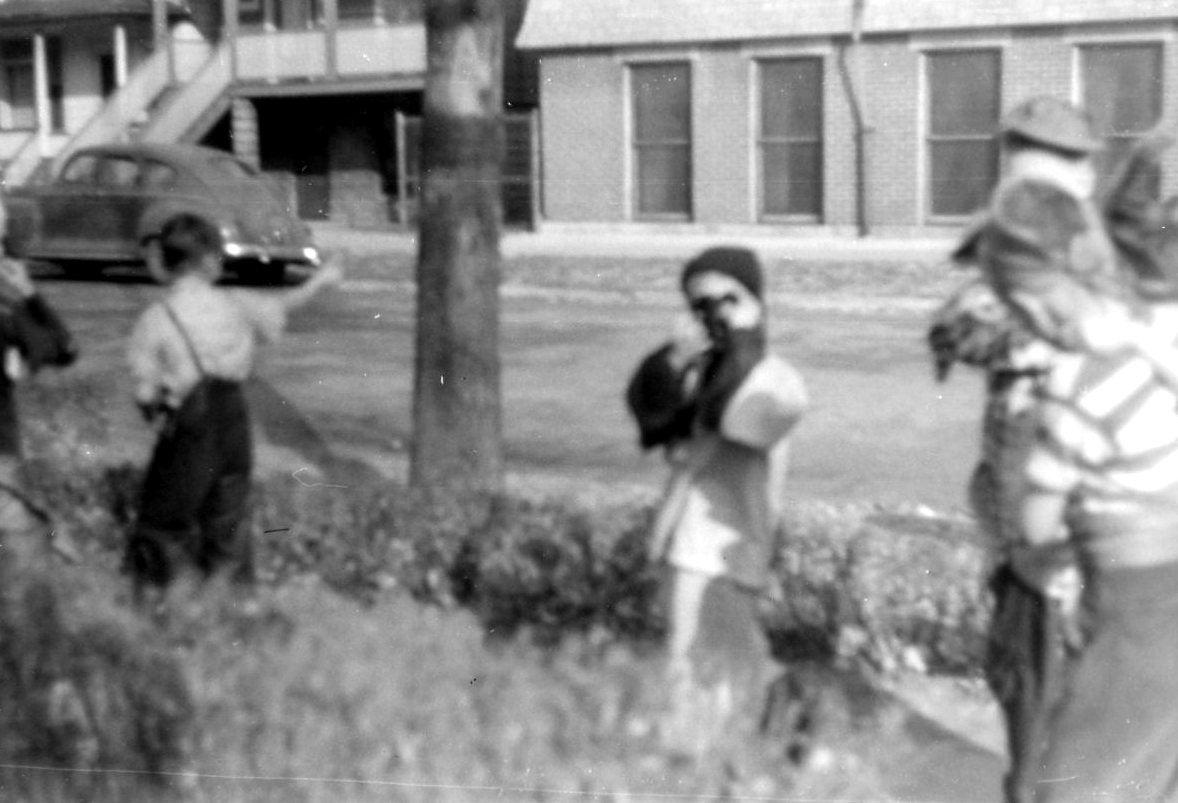
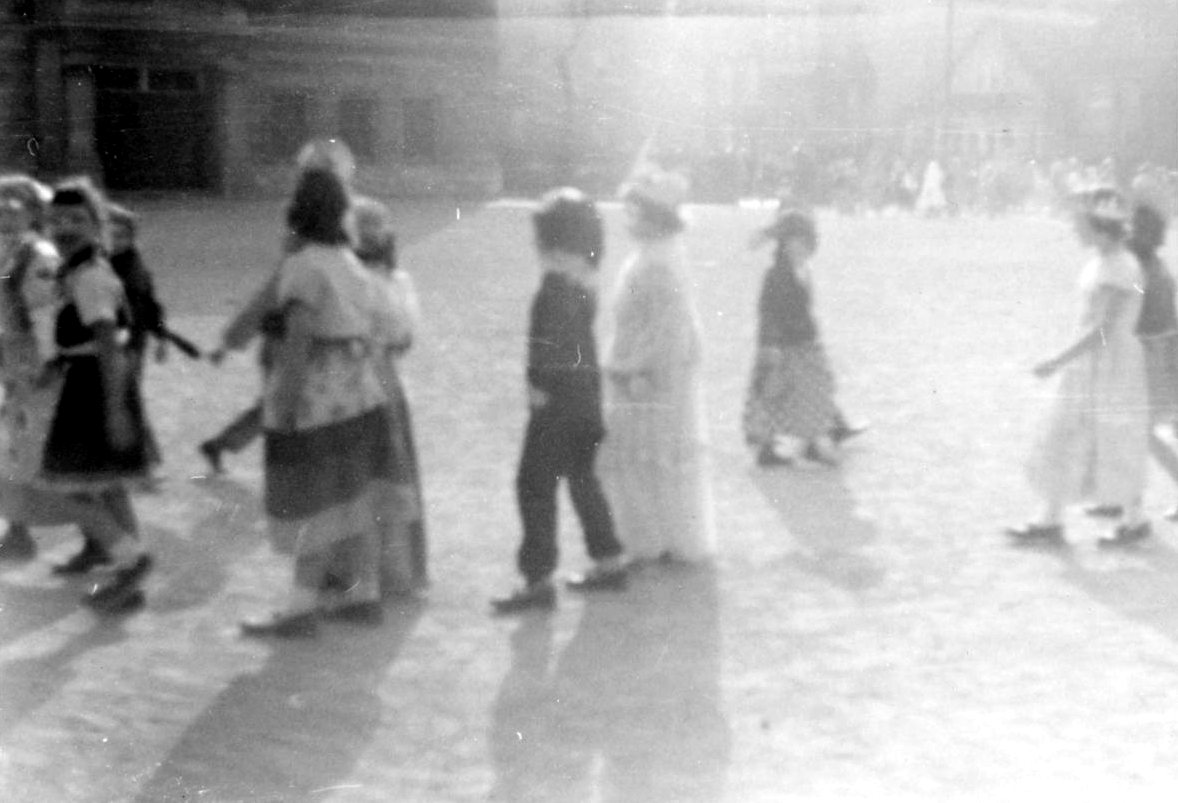
When I was looking through photos with my mom, I'm asking who is in this photo, what is this photo about, and out came "Oh, that was the Halloween Parade, and that's my cousin in the 2nd picture"
So my mom continued to tell me - In the 1950s schools in Chicago would commonly hold Halloween parades where children marched around the schoolyard or neighborhood blocks in homemade outfits.
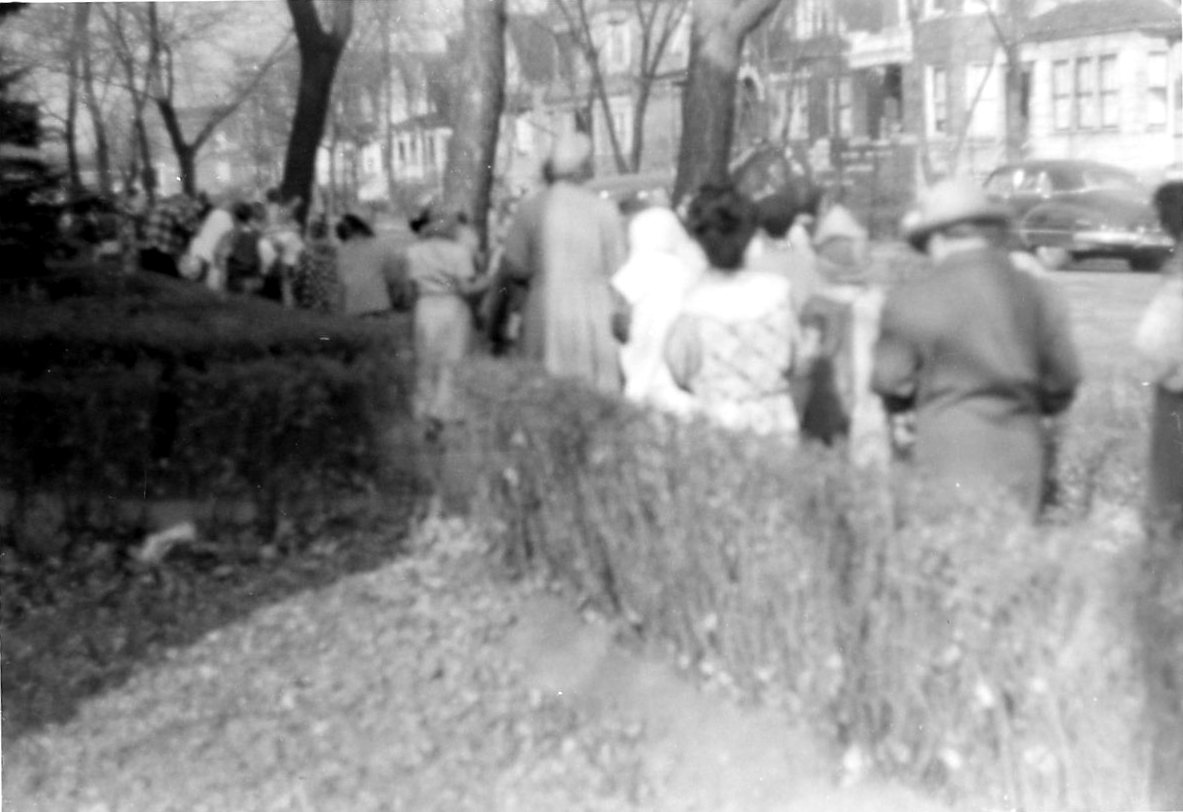
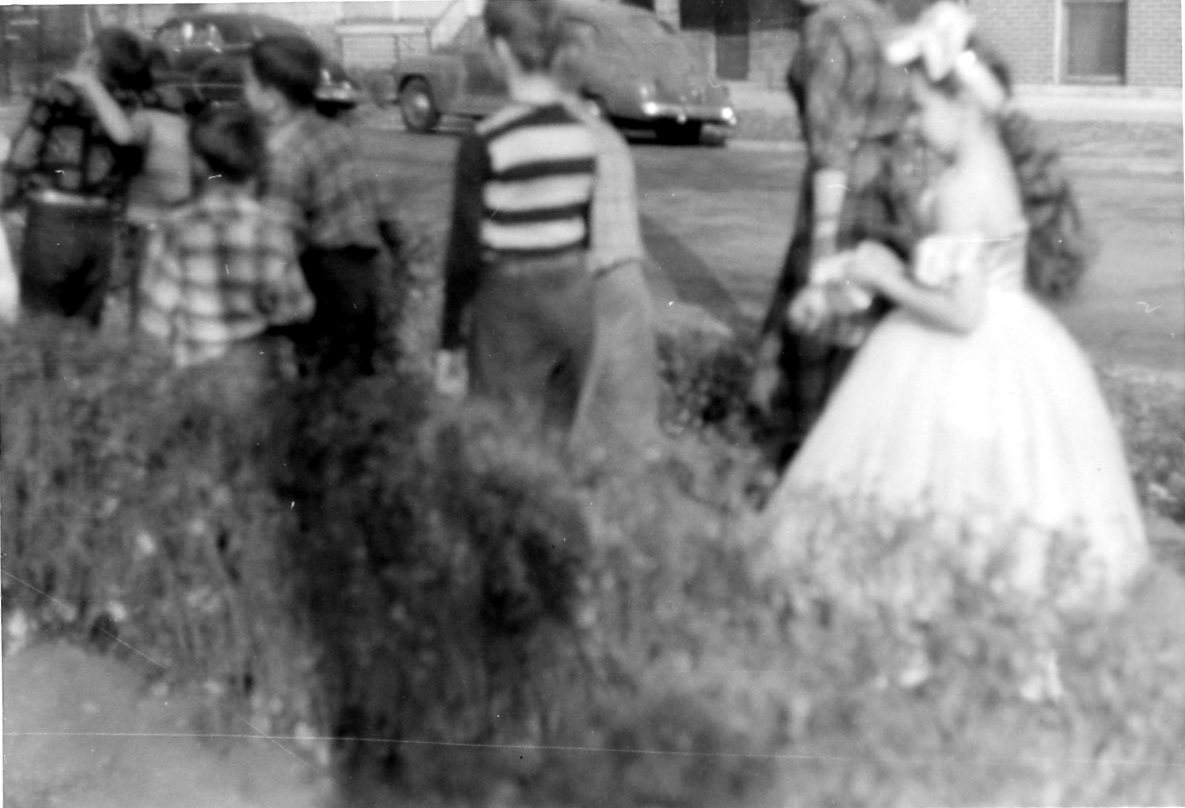
I've shared 5 photos, they blurry yes, but it triggered my mom's memory like it was yesterday. The 3rd picture is her cousin, she pointed that out. But the rest shows the kids walking around the school lot, and then down the Chicago neighborhoods.
What a photograph can tell you
A photograph is a record, even when nobody wrote on it. The clothes date it to within a few years. The building behind the children can be checked against a school's own history, or a fire insurance map. A car at the curb has a model year. A homemade costume says something about the household that made it. A tradition that occurred but may not exist today.
What a photograph almost never records is who is in it. That part survives only for as long as someone remembers, which is why the most useful thing anyone can do with an old family picture is write the names on the back, lightly, in soft pencil, while someone can still tell you them.
Halloween on the Northwest Side, in the record
The parade in these snapshots was the tame end of a long change. In the 1920s Chicago's Halloween was destructive: the Tribune reported burning wagons, cut tires and stolen cars in 1921, and in 1926 a fire set in a West Side junk shop killed a man. Children were asked that year to pledge not to do damage, with free movies as the reward. In 1942 the City Council asked the mayor to make October 31 "Conservation Day". After the war, across the country, adults moved the day indoors and toward younger children, and schools and PTAs organized it.
By the early 1950s that organizing is visible in the record. The Chicago Park District's own photographer, Dick Crist, photographed children in costume at the Halloween party in the Portage Park fieldhouse in 1951. The Park District photographed a Halloween event at River Park, between Albany Park and Lincoln Square, in 1952, and another at Independence Park in Irving Park. Those photographs are in the Chicago Park District Records at the Chicago Public Library, where you can see the 1951 Portage Park party and the 1952 River Park event in the library's digital collections. The library's catalog notes that some of the 1951 Portage Park costumes are ethnic and racial stereotypes. That is part of the record too.
Schools held their own parades. The Ann Arbor News photographed one at Burns Park School in Michigan in October 1951, and a Chicago Sun-Times photographer caught the children of Bateman Elementary, on North Richmond Street in Irving Park, lined up for theirs in 1963.
None of those records is the parade in our snapshots. What they show is that it was one of many: on the North and Northwest Sides in the 1950s, Halloween had moved from the alley to the schoolyard and the fieldhouse, and somebody's parent was usually there with a camera.
The school in our snapshots is Linné, the Carl von Linné School on North Sacramento Avenue in Avondale, a neighborhood school that has served Avondale for well over a century. The parade went around its schoolyard and out onto the blocks around it.
My own Halloweens
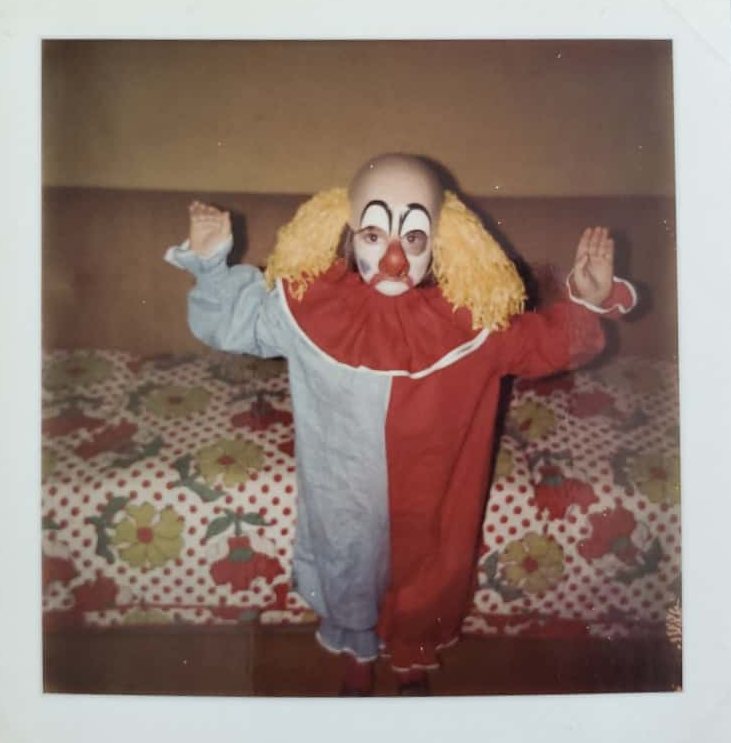
Twenty-some years after that parade, it was my turn. My costume was store-bought. It came in a box with a cellophane window on the front so you could see what was inside, and I still remember the noise that box made.
By the 1970s many costumes arrived that way: off a store shelf, in a box with a clear window, not sewn at home from what was in the closet. It is one more small change you can see in a family's photographs if someone kept them.
Mine did. I am thankful my parents held on to the pictures, because without them I would have the memory of the box and nothing to show for the clown.
Seventy-four years on, five blurry snapshots were enough for my mother to name the parade, the school and her cousin. Ask your family members about their memories, maybe they'll pull out photos, or it will be a memory well described that you can envision it. Ask while someone can still tell you what they show, and write it on the back.
Do your parents recall any Halloween traditions from when they grew up, are there photographs nobody has put a name to yet? Start a conversation — the first one is free.
The Block, by email
We're always turning new corners on The Block, subscribe to receive new posts from The Block when they are posted.